

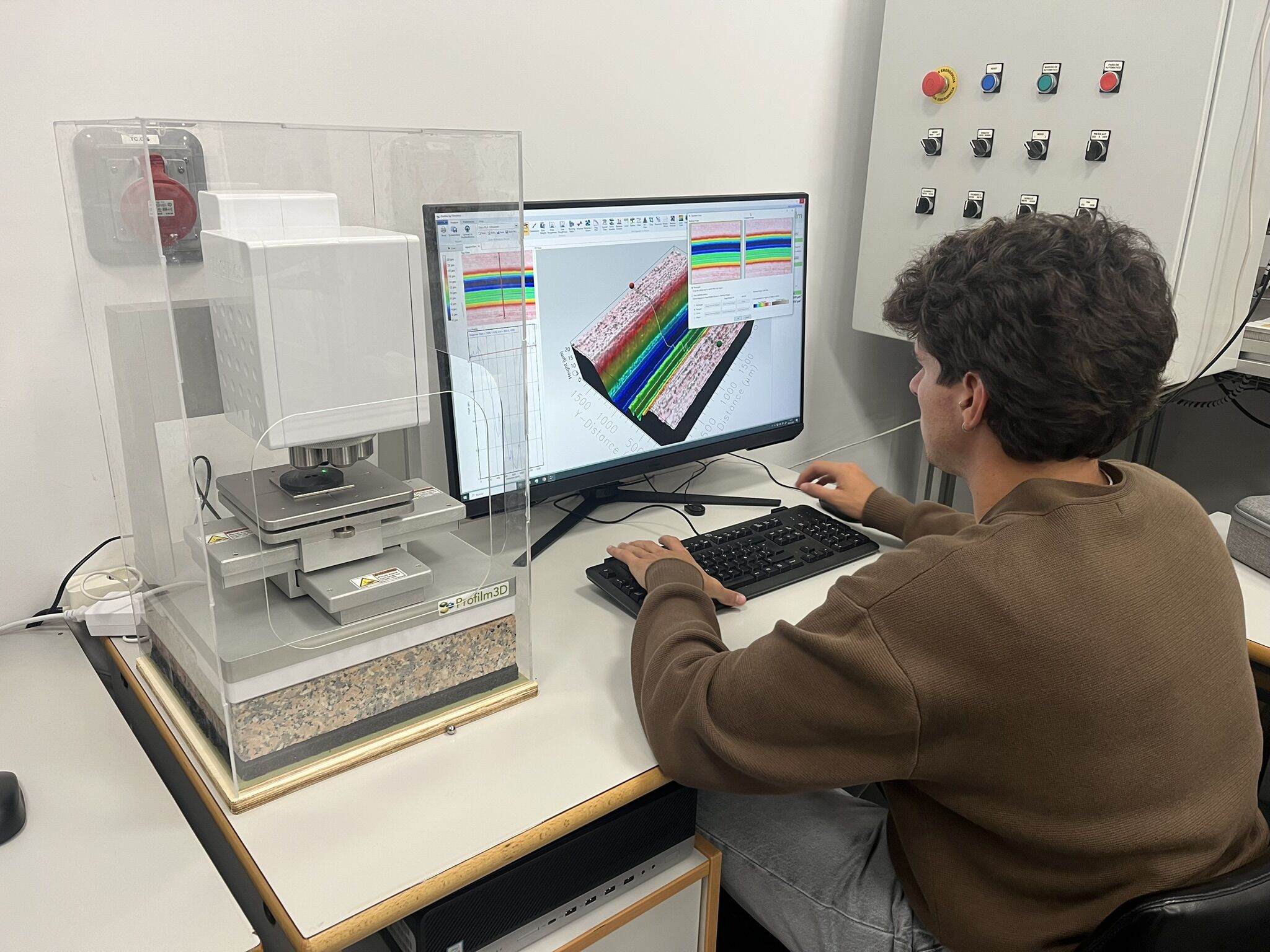
Tribology, the study of friction and wear between surfaces in contact, is one of MechLab’s main research lines. In the laboratory we work on it mainly with two instruments that are used together: a pin-on-disk tribometer, which produces wear under controlled conditions, and a 3D optical profilometer, which then measures the track left on the surface.
How the test works
In the tribometer, a pin rests on a rotating disk, so the pin always rubs along the same circular track. The force applied by the pin, the speed, the sliding distance, the pin and disk materials, the humidity and the lubricant can be changed in each test, and both dry and lubricated tests are run. This makes it possible to compare how different material pairs behave under the same conditions, or how one material behaves under different conditions.

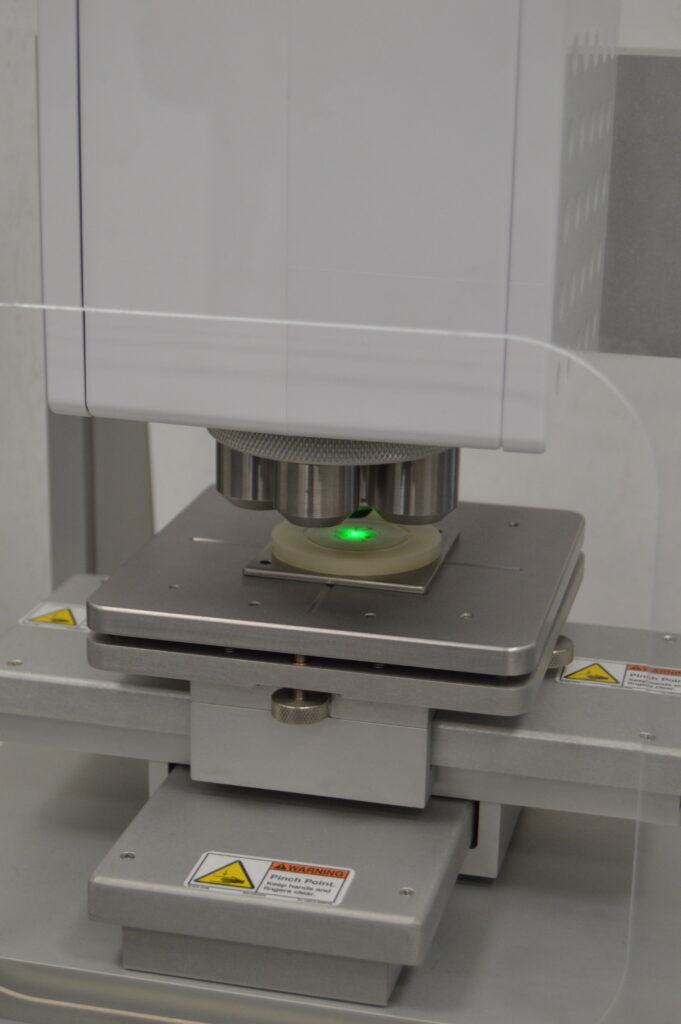
After the test, the sample goes to the profilometer, a Profilm3D that measures the surface optically without touching it. It gives us 3D surface maps and roughness profiles of the wear track, showing its shape and depth. As there is no contact, the measurement does not alter the surface being analysed.
Why it matters
With these tests we study friction and wear in metals, polymers and composite materials, both dry and lubricated. They help to compare materials and lubricants before they are used in parts that work in contact, such as gears, guides or bushes. Both instruments are used in research projects, doctoral theses and bachelor’s and master’s final projects.
Further information: the specifications of these and other laboratory instruments are on the MechLab equipment page. For enquiries about their use: mechlab@upv.es.